

As we move into 2025, both foreign and personal investments are evolving rapidly, driven by global economic shifts, technological advancements, and changing consumer preferences. To help you stay informed, here’s a look at 10 key investment statistics and trends for 2025, split between foreign investment insights and personal investment habits.
Foreign Investment Statistics to Know for 2025
1. Global foreign direct investment flows were $297 billion in Q1 of 2024 (source)
The global foreign direct investment (FDI) is projected to grow by 4.9% in 2025, after recovering from the sluggish performance due to geopolitical tensions and pandemic-related challenges. This marks a notable rebound, reflecting the world’s return to economic stability and the reopening of global markets.

2. The U.S. is the top destination for FDIs (source)
Foreign direct investment statistics show the U.S. has been the top destination for FDIs for 12 years in a row. In the first quarter of 2024, the U.S. received $76 billion in FDI inflows. The robust growth of the U.S. economy, along with a recovery in consumer confidence, likely played a key role in its strong performance.
Canada also remained steady, securing its second-place position for the 12th year in a row among the top five markets. China saw a remarkable rise, moving from 7th to 3rd, which can be attributed to its relaxation of capital restrictions for foreign investors in key cities like Shanghai and Beijing in September 2023.
Rounding out the top 10 are the United Kingdom, Germany, France, Japan, United Arab Emirates, Spain, and Australia. While Germany leads Europe, it dropped from 4th to 5th year-over-year, switching places with the UK. Meanwhile, France was stable at 6th, Japan fell from 3rd to 7th, UAE skyrocketed from 18th to 8th, Spain fell one rank from 8th to 9th, and Australia remained stable in 10th place.

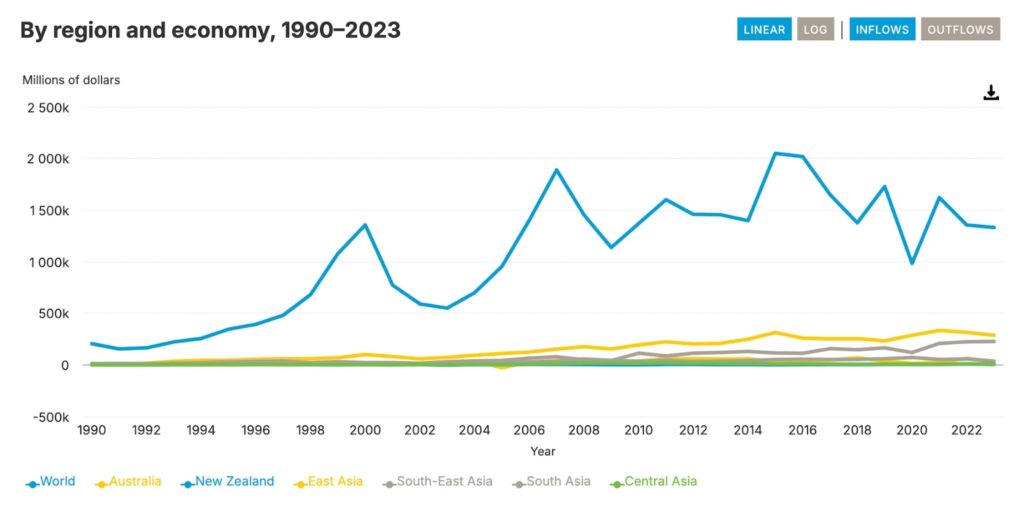
3. Asia-Pacific region is projected to dominate FDI inflows (source)
The Asia-Pacific region, especially countries like China and India, remains a strong destination for foreign investment. In 2024, it is expected to account for over 35% of global FDI, supported by investments in manufacturing and technology.
Click here for interactive data that reveals country-by-country facts and comparisons.
4. FDI in Africa is projected to decrease across most of the continent, with only Southern Africa increasing (source)
Overall, FDI in Africa is expected to decrease, according to the 2024 World Investment Report. However, some countries are expected to increase, particularly in Southern Africa.

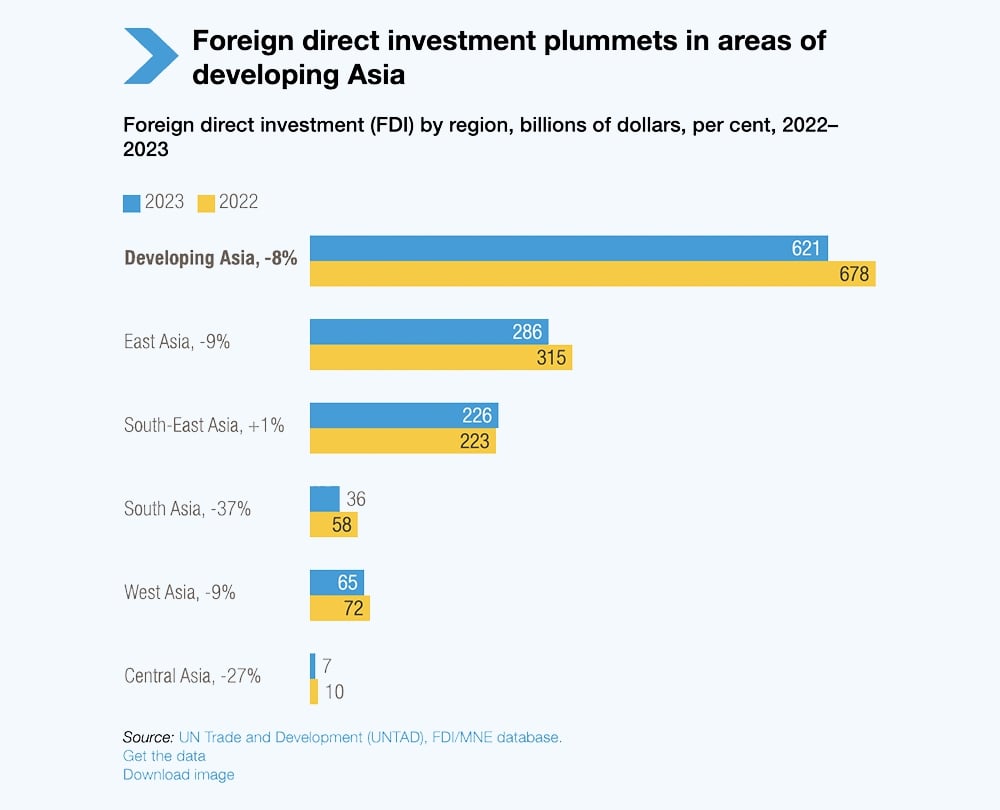
5. Overall, FDI to developing countries fell 7% in 2023 to $867 billion (source)
This decline reflects a challenging global environment marked by economic fragmentation, geopolitical tensions, and tightening financial conditions. Regions like South-East Asia managed to maintain steady investment inflows, but many other developing regions, particularly in Latin America and Africa, experienced significant reductions.
Personal Investment Statistics to Know for 2025
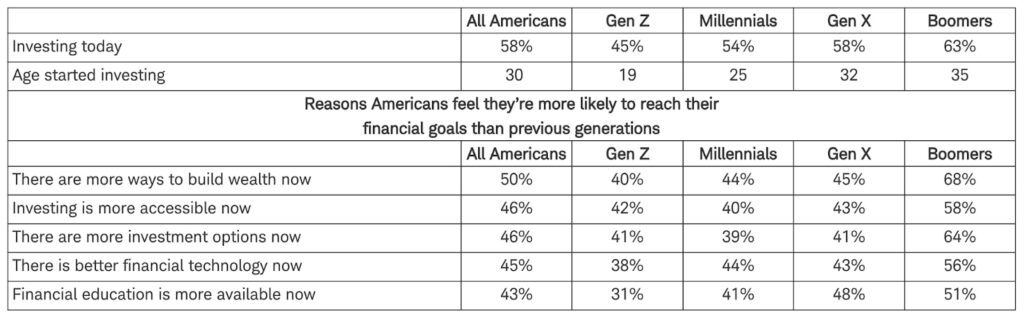
6. 58% of U.S. households are investing in the stock market (source)
This reflects a significant interest in equity markets, particularly with the rise of online trading platforms that make stock investments more accessible to the average person.
Segmented by generation, 63% of Boomers invest in the stock market while 58% of Gen X, 54% of Millennials, and 45% of Gen Z do the same.
While older Americans are more likely to invest in the stock market, across all generations the average age to start investing is 30 years old.
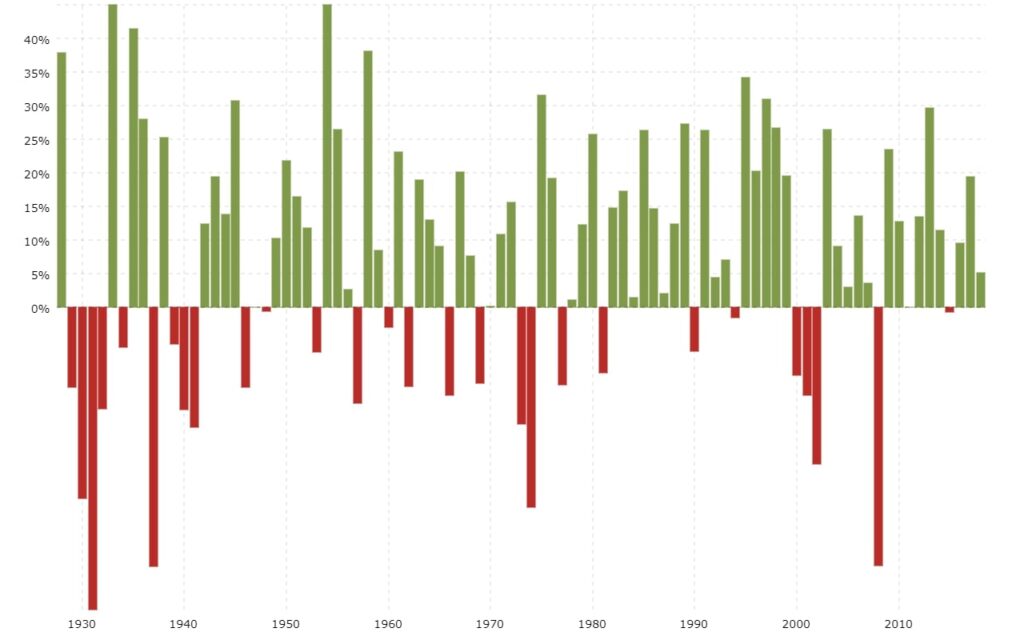
7. The average annual return of the S&P 500 is 10% per year (source)
Historically, the stock market has proven to be a reliable avenue for Americans who want to build wealth. From April 1936 to March 2024, the S&P 500 Index averaged an annual return of 10.75%.
Although annual returns can fluctuate significantly from year to year, the stock market’s long-term performance shows that it remains a powerful tool for growing wealth over time, especially for investors who maintain a diversified, long-term perspective.
Below is the average annual return of the S&P 500 from 1928 (37.88%) to 2024 (21.43%):
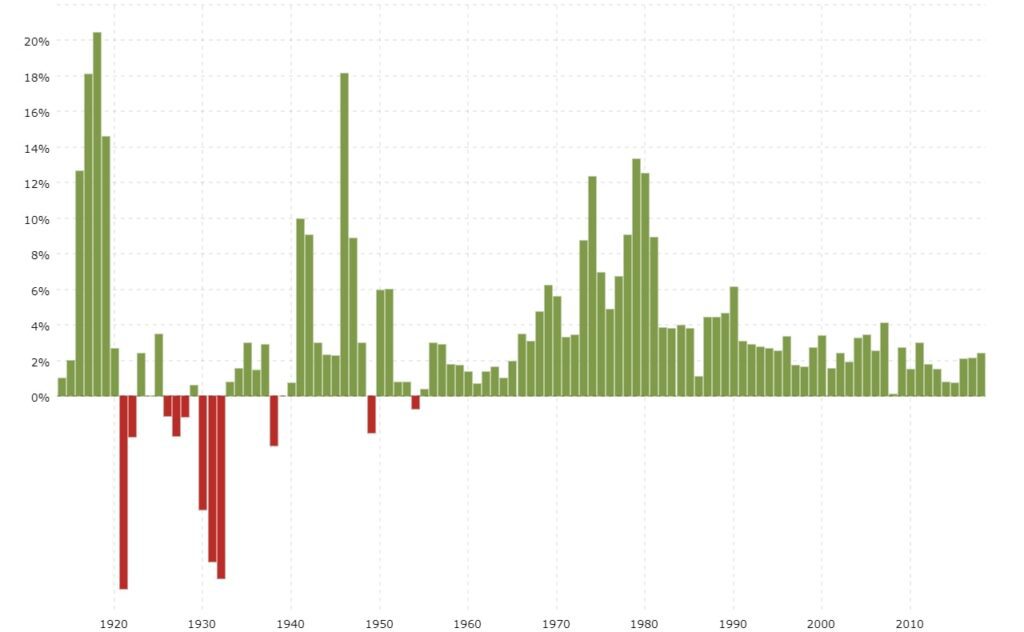
8. The average annual inflation rate is 3.8% per year (source)
The average annual inflation rate in the U.S. over the past several decades has been approximately 3.8%, which reflects the general increase in consumer prices and the cost of living.
While inflation can vary significantly from year to year due to factors like energy prices, supply chain disruptions, or changes in monetary policy, this long-term average provides a useful benchmark for evaluating purchasing power over time.
Maintaining investments that outpace inflation is critical for preserving wealth, as inflation erodes the real value of money and savings.
Below is the annual inflation rate from 1914 (1%) to 2024 (2.79%):
9. 80% of day traders lose money (source)
This is primarily due to the highly speculative and volatile nature of short-term trading. Many novice traders enter the market without fully understanding the risks, leading to quick losses driven by emotional decisions or a lack of strategy.
The market’s inherent unpredictability, combined with high transaction fees and poor risk management, often makes it difficult for day traders to sustain profits over time.

10. If you start at age 25, the monthly investment needed to reach $1 million by age 67 is $350 (source)
The power of compound interest makes starting early a critical factor in building wealth. If you begin investing at age 25, you would need to invest about $350 per month to reach $1 million by retirement, compared to $1,650 per month if you start at age 45.
This stark difference highlights the impact of time on investment growth, as starting earlier allows for smaller monthly contributions and greater wealth accumulation over time.

Conclusion
As we enter 2025, both foreign and personal investment landscapes are undergoing significant transformations. Global FDI is on the rise, particularly in regions like Asia-Pacific and Africa, while personal investors are increasingly favoring sustainable, tech-driven, and alternative investment strategies.
These trends highlight the evolving priorities of investors, driven by a mix of economic recovery, environmental concerns, and technological innovations. Whether you’re a multinational enterprise or an individual investor looking to build wealth and achieve financial independence, staying ahead of these trends will be crucial for success in 2025.

